Disclosure: This article contains affiliate links. If you purchase through them, we may earn a commission at no extra cost to you. We only recommend products we have genuinely reviewed and believe in.
"Eat more protein" might be the most repeated advice in nutrition — and the least specific. More than what, exactly? The official minimum is famously low, the fitness internet quotes numbers two to three times higher, and somewhere in between is the amount that actually helps you lose fat, hold onto muscle, and stay full between meals.
Here's the honest, evidence-based answer — plus a 30-second way to calculate your own number.
The Short Answer
The government's minimum is 0.8 grams of protein per kilogram of body weight (about 0.36 g per pound) — enough to prevent deficiency, but not enough to thrive. For weight loss, muscle, and satiety, research points to 1.2–2.0 g/kg (roughly 0.5–0.9 g per pound). A practical target for most people trying to lose fat is about 0.7–1 gram of protein per pound of body weight.
Why the "official" number is a floor, not a goal
The Recommended Dietary Allowance (RDA) for protein is 0.8 g/kg of body weight per day. It's an important number to understand — and easy to misread. The RDA is set to prevent deficiency in a sedentary adult, not to optimize body composition, strength, or appetite. Think of it as the nutritional equivalent of "the minimum balance to keep your account open," not "the amount you'd actually want to save."
For a 70 kg (154 lb) person, that floor works out to about 56 grams a day. The moment your goals include losing weight, building or preserving muscle, exercising regularly, or simply not being ravenous by mid-afternoon, the optimal number climbs well above it.
How much protein you actually need, by goal
The right target depends on what you're trying to do. These ranges reflect the weight of current sports-nutrition and weight-loss research:
| Your goal | Per pound of body weight | Per kg of body weight |
|---|---|---|
| Sedentary, general health (RDA floor) | 0.36 g/lb | 0.8 g/kg |
| Active / general fitness | 0.5–0.7 g/lb | 1.2–1.6 g/kg |
| Building muscle | 0.7–0.9 g/lb | 1.6–2.0 g/kg |
| Losing weight (while protecting muscle) | 0.7–1.0 g/lb | 1.6–2.2 g/kg |
A 2018 meta-analysis in the British Journal of Sports Medicine found that protein intakes beyond roughly 1.6 g/kg produced little additional muscle benefit for most people — a useful ceiling to keep in mind before you chase ever-higher numbers.
A 30-second calculation
Don't overthink it. Take your body weight in pounds and multiply:
- Maintaining or generally active: body weight × 0.5–0.7
- Losing fat or building muscle: body weight × 0.7–1.0
So a 160 lb person aiming for fat loss lands around 112–160 grams of protein per day. If you carry a lot of excess weight, calculating from your goal weight (or your height-based ideal weight) keeps the target realistic.
Pro Tip
If math isn't your thing, a simpler rule works surprisingly well: aim for a palm-sized portion of protein at every meal, plus a protein-rich snack. For most people that naturally lands in the right range without weighing anything.
Why protein is the macronutrient that matters most for weight loss
Protein punches above its weight for three reasons that all point in the same direction — eating less without feeling like you're white-knuckling it.
1. It's the most filling macronutrient. Gram for gram, protein blunts hunger hormones more than carbs or fat, which is why a high-protein breakfast quietly kills mid-morning cravings.
2. It costs you calories to digest. Your body burns roughly 20–30% of protein's calories just processing it (the "thermic effect of food"), compared with 5–10% for carbs and 0–3% for fat. A portion of every protein calorie effectively pays its own way.
3. It protects muscle in a calorie deficit. When you lose weight, you want the loss to come from fat, not muscle. Adequate protein — combined with some resistance training — signals your body to hold onto lean mass, which keeps your metabolism higher. This is the mechanism we cover in depth in our guide to the science of sustainable weight loss.
How to actually hit your number
Knowing the target is easy. Reaching it — especially before lunch, when most people eat almost no protein — is the real challenge. A few habits make it automatic:
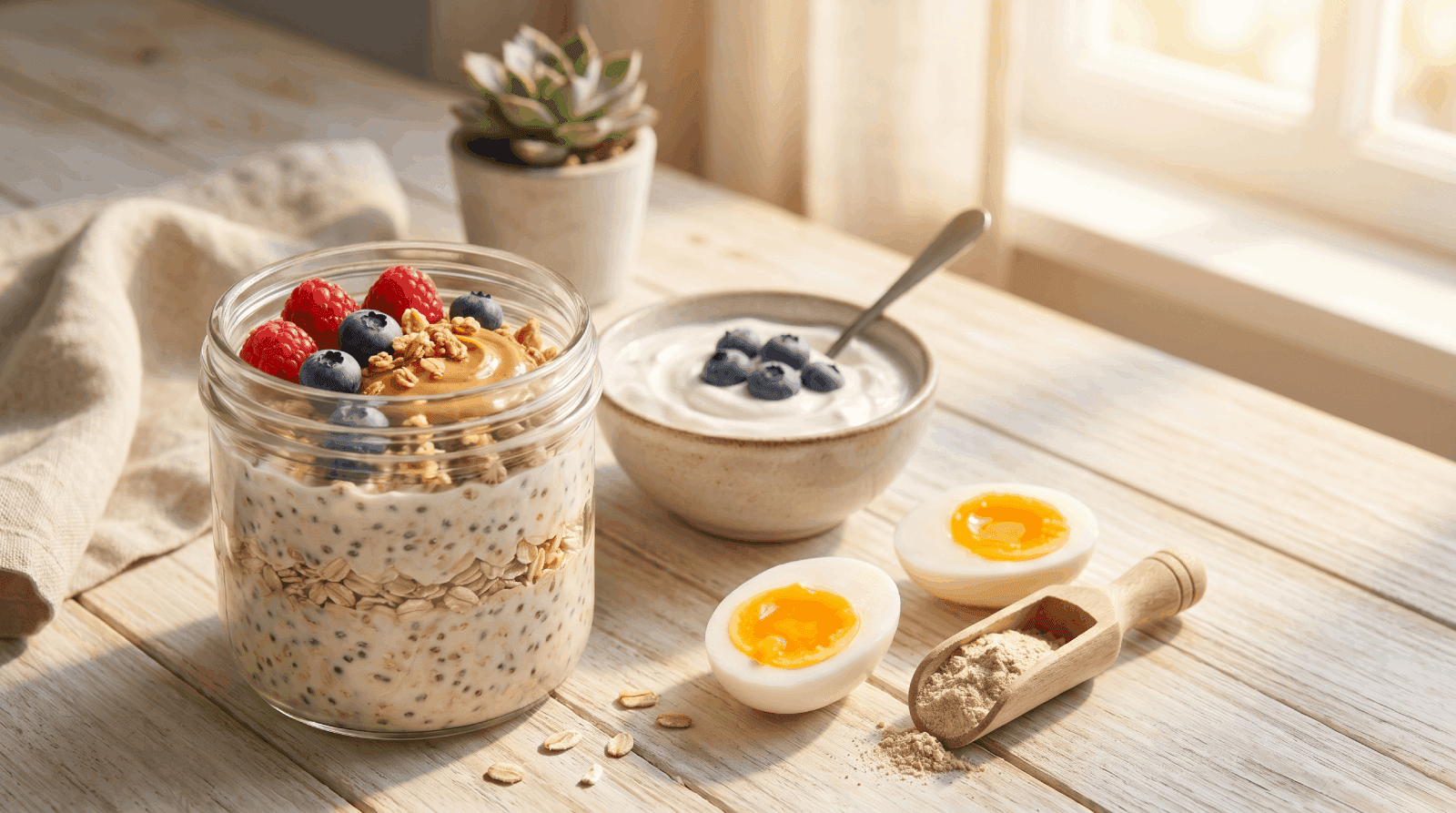
- Front-load breakfast. This is where most people fall short. A bowl of high-protein overnight oats lands around 30 g before you've even left the house, and you make it the night before.
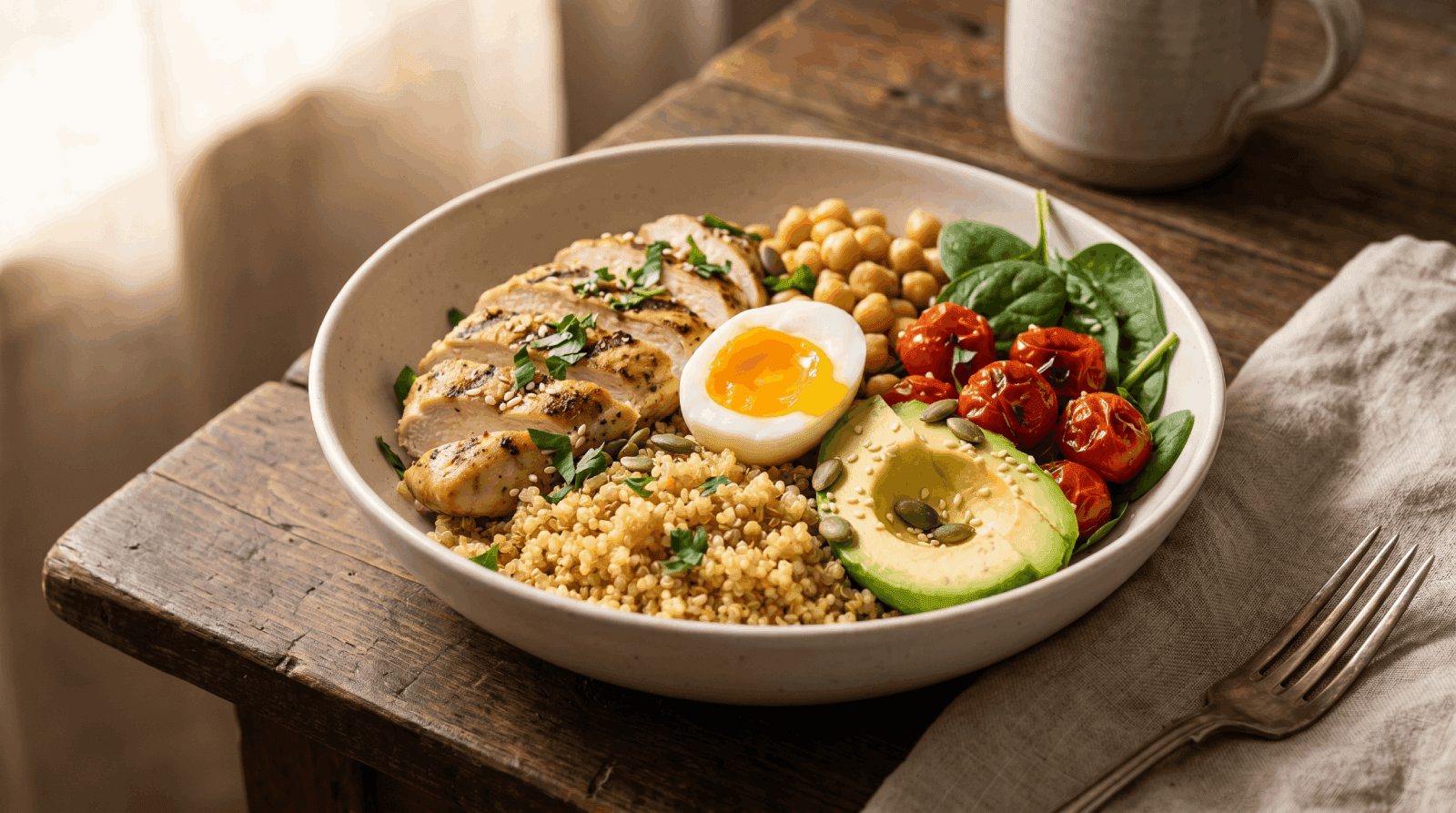
- Anchor every meal around a protein. Decide the protein first, then build the plate around it. A chicken and quinoa satiety bowl is a good template — protein plus fiber plus volume.
- Use protein-dense snacks. Greek yogurt, cottage cheese, a handful of nuts, or a protein smoothie close the gap painlessly.
- Spread it across the day. Your body uses protein best in 20–40 g doses per meal, so three or four protein hits beat one giant steak at dinner.
An easy way to hit your protein target
The Smoothie Diet builds your day around protein- and fiber-rich smoothies — 36+ recipes, a 21-day plan, and a 60-day money-back guarantee. A simple way to front-load protein without cooking.
See The Smoothie Diet →Can you eat too much protein?
For healthy people, the "protein is hard on your kidneys" worry is largely a myth — that risk applies to people with pre-existing kidney disease, not the general population. Very high intakes simply offer diminishing returns: once you're meeting your muscle and satiety needs, extra protein is just extra calories, and it can crowd out the fiber-rich vegetables, fruit, and whole grains your gut and overall health depend on.
The sweet spot for nearly everyone sits comfortably between the RDA floor and about 1 gram per pound — high enough to get every benefit, not so high that it becomes a problem to solve.
The Takeaway
The RDA's 0.8 g/kg keeps you out of deficiency; it doesn't get you results. If you're trying to lose fat, hold onto muscle, and stop fighting hunger, aim closer to 0.7–1 gram of protein per pound of body weight, spread across the day, with a real effort to front-load it at breakfast. It's one of the highest-leverage changes you can make — and unlike most diet advice, it works by making you less hungry, not more disciplined.
Disclaimer: This article is for informational purposes only and is not medical advice. Protein needs vary with age, activity, and health status, and people with kidney disease or other conditions should follow their healthcare provider's guidance. Consult a qualified professional before making significant dietary changes.
Frequently Asked Questions
- Q
How much protein should I eat a day to lose weight?
For weight loss while protecting muscle, most research supports about 0.7–1 gram of protein per pound of body weight (1.6–2.2 g/kg) per day. For a 160 lb person, that's roughly 112–160 grams daily, spread across meals.
- Q
Is 100 grams of protein a day enough?
It depends on your size and goals. 100 g is plenty for a smaller or sedentary person, but a 180 lb person aiming for fat loss or muscle would target closer to 130–180 g. Use about 0.7–1 g per pound of body weight as your guide.
- Q
How much protein do I need to build muscle?
For muscle growth, aim for roughly 0.7–0.9 grams per pound (1.6–2.0 g/kg) of body weight, paired with resistance training. A 2018 meta-analysis found little extra benefit beyond about 1.6 g/kg for most people, so there's no need to go far higher.
- Q
How much protein can the body absorb per meal?
Your body absorbs essentially all the protein you eat, but it builds muscle most efficiently from about 20–40 grams per meal. That's why spreading protein across three or four meals works better than eating it all at once.
- Q
Can eating too much protein be harmful?
For healthy people, high protein intake is safe — the kidney-damage concern applies mainly to those with existing kidney disease. The main downside of overdoing it is diminishing returns and displacing other nutritious foods. For most, the RDA floor up to about 1 g per pound covers every benefit.